
The Architecture of Healing And Heritage Pakistan Pavilion, Expo 2025 Osaka, Kansai, Japan

Curator: Noorjehan Bilgrami

By Rumana Husain and Mukhtar Husain

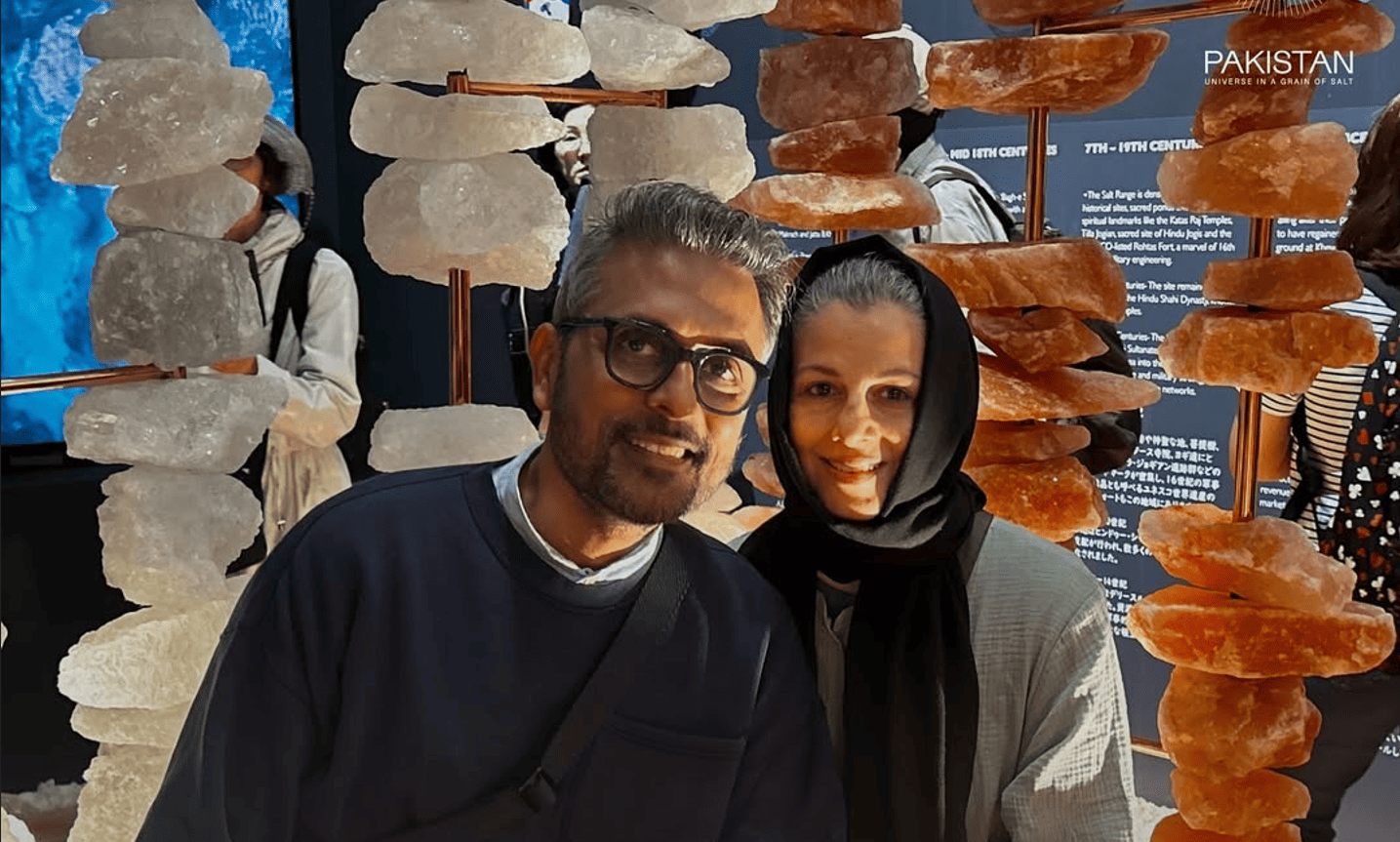
At the heart of Expo 2025 Osaka—titled, Designing Future Societies for Our Lives—the Pakistan Pavilion stands not just as a physical edifice, but as a quietly pulsating organism, breathing with ancient mineral life. Eschewing the fanfare of glass façades and techno-futurist motifs, the Pavilion showcases the pink salt of Pakistan’s 800 million years old Salt Range. Here, architecture becomes both relic and remedy—a poetic gesture that captures, with an admirable economy of means, the curatorial theme of “The Universe in a Grain of Salt.”

Unlike many national pavilions which often read as declarations of modernity or spectacle-driven branding exercises, the Pakistan Pavilion offers a rare counterpoint: a minimalist sanctum that appeals to the senses, slows down time, and beckons visitors to contemplate the elemental. Rock salt, in this context, becomes more than a material—it is a metaphor, a symbol of endurance, and a vessel of collective memory. It is the Pavilion’s medium, message, and muse.

The Origins and Evolution of World Expos

The World Expo concept traces its origins to the Great Exhibition in 1851, held at London’s Crystal Palace. Conceived by Prince Albert and organised by Henry Cole, this was the first global stage celebrating industry, culture, and technology—setting the precedent for international gatherings showcasing national achievements and fostering global understanding.

Historical Milestones

  • 1851 London: Pioneered global exhibitions.
  • 1893 Chicago: Iconic event introducing electric illumination.
  • 1967 Montreal: Celebrated modernity in Expo ‘67.
  • 2010 Shanghai & 2015 Milan: Merged tradition with futuristic visions.
  • 2020 Dubai: for the “Connecting Minds, Creating the Future” theme, the Pakistan Pavilion highlighted, cross-sector themes centred on sustainability and innovation.
  • 2023 Doha: for the “Green Desert, Better Environment” theme, the Pakistan Pavilion centred on sustainable agriculture and cultural heritage.

Pakistan in Past Expos

The Pakistan Pavilion at the Expo 2017, Astana, Kazakhstan featured a mosaic façade titled “Resplendent, Magnificent Pakistan,” celebrating diverse landscapes from K2 to the Thar Desert. Artisans performed live crafts, while exhibits highlighted wind energy innovations.

In 2018, Pakistan participated at the Lyon world cultural festival in France, showing documentaries, crafts, and cuisine as part of a soft-diplomacy initiative.

At the Dubai Expo 2020, curated by Noorjehan Bilgrami, the Pakistan Pavilion embraced the theme “Pakistan: The Hidden Treasure,” portraying 7,000 years of history and promising future potential. However, there was a radical departure from the other versions. Whereas the dynamic and eye-catching exterior façade was designed by the noted Pakistani artist Rashid Rana featuring 24,000 individual prism-like modules, symbolising Pakistan’s diversity, the interior featured immersive zones like the Sheesh Mahal corridor—celebrating mirror-work and spiritual heritage—alongside displays of natural wonders, cultural coexistence, and artisanal crafts.

This won the Silver Award for Interior Design from among 192 entries. It was a milestone for Pakistan.

Japan has been a source of inspiration for Noorjehan Bilgrami and holds a cherished place in her life. For the Pakistan Pavilion, Osaka, also curated by her, the vision threads art, architecture, science, and sustainability into a seamless narrative—a reflection of her longstanding commitment to material heritage and contemporary craft. She and her small curatorial team—architect Fatima Ausat, sculptor Fahim Rao, architect Irfan Naqi—have created this Pavilion as a sensory encounter.

The message of the Pavilion is clear: Salt is not just a culinary or economic resource; it is a custodian of culture, health, and ecological wisdom. The educational exhibits, including interactive salt table and mineral displays, make this message accessible. Scientific data and sensory play are beautifully integrated, offering visitors layered ways of understanding Pakistan’s geological and wellness traditions.

Moreover, the Pavilion’s post-Expo plans are  well-defined. All salt used in the construction will be repurposed, ensuring that nothing is wasted.

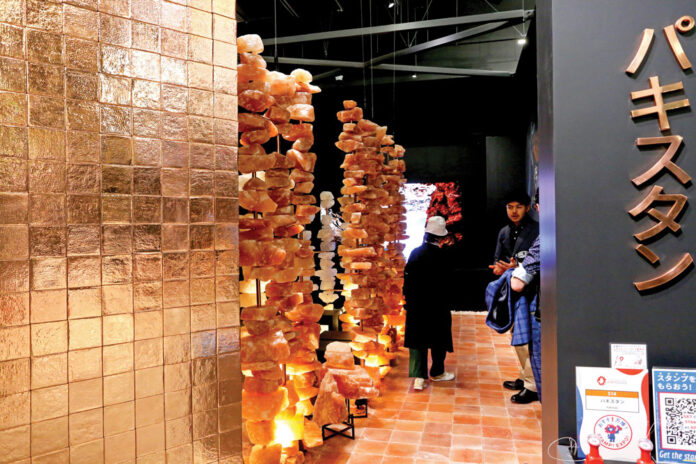
The architecture of the Pavilion is conceptualised around salt’s innate properties—its translucency, crystalline texture, fragility, and its ancient presence. The Pavilion’s area is 50 sq metres. It is situated at the back of a large hall under one common roof with 25 other countries. A commercial space of 17 sq metres is situated diagonally in front of the Pavilion.

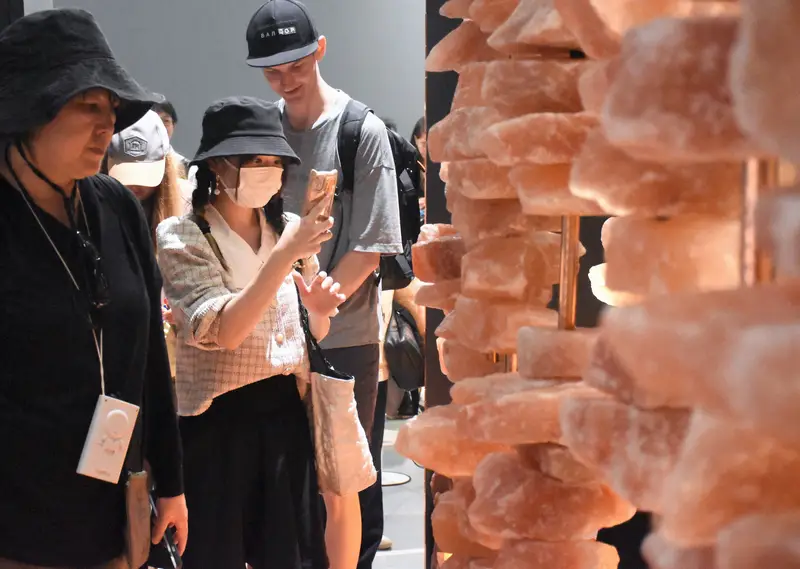
The floors, walls, and installation features are composed entirely of Pink Himalayan Salt. To the right, a long charcoal wall stretches out, gradually giving way to sweeping views of the majestic landscape and ancient terrain of the Potohar mountain range, home of the historic salt mines. The wall opens with a specially commissioned Urdu poem by Zehra Nigah, presented alongside its English and Japanese translations. The charcoal wall provides a striking backdrop for hand-painted imagery in the Miniature tradition by Farooq Mustafa Maeda, a Pakistani artist who has lived in Japan for the past 24 years. He has meticulously rendered each detail directly onto the wall with sensitivity and skill.

Chronologically arranged printed panels trace the origin of salt, beginning with its formation from an ancient sea over 800 million years ago. The wall highlights the remarkable fossil record, spanning nearly 20 million years. This salt has been a silent witness to human history, its rituals, conquests, cultural exchanges, and the steady movement of people and ideas across time. This is not just a sustainable or aesthetic choice—it is a philosophical one. The tactile and olfactory experience of walking on and among salt-laden surfaces, breathing in the mineral-rich air, and witnessing the soft interplay of light refracted through translucent salt blocks, creates a sense of being “inside” the material rather than merely observing it.

The pink hue of the salt carries with it the trace of deep geological time. It is the iron content—mineral remnants of prehistoric oceans—that imbues the salt with its gentle blush. In a sense, to walk through the Pavilion is to walk through time, through sediment and story, through a medium that remembers the primordial. This is architecture not as statement but as invitation— to introspect, to feel, to remember. Such tactility, in an increasingly digital world, is radical.

From a strictly architectural standpoint, the Pavilion is both a meditation on materiality and a study in atmospheric design. The sculptural interventions, respect the salt’s structural delicacy, resulting in forms that are robust. There is an organic softness in how the structures are composed—walls seem to have been grown, not built.

Light plays a key role in animating the space, and sensitive lighting design avoids theatricality. Instead, it employs warm, low-intensity illumination that seeps through salt walls and bounces gently off mineral surfaces, creating a subdued, other-worldly glow. In some sections, the light is diffused to the extent that it feels like being inside a living crystal. This use of light not only highlights the salt’s translucency but also serves a thermos-regulatory function, contributing to the Pavilion’s commitment to energy efficiency. We remember this light very well from our visit to the Khewra Mines many years ago.

‘The Healing Garden’ chamber operates not merely as a room, but as a ritual. The air is subtly infused with salt vapours; the textures underfoot are granular and cool; the walls glisten faintly. Visitors are encouraged to sit, reflect, and allow the mineral air to calm both breath and mind. It is an almost monastic experience, where architecture functions as therapy. Unlike the clinical aesthetics of modern health spaces, here the cure is gentle, elemental, and wrapped in beauty. This spatial gesture is deeply political as well. It reclaims traditional, natural methods of healing in an age of pharmaceutical excess. It reframes wellness not as a luxury commodity, but as a birthright embedded in the land itself. By spotlighting halotherapy, the Pavilion subtly critiques the global health- industrial complex and posits a model of preventive, accessible, and low-impact care.

A GRAIN OF SALT, A WORLD OF MEANING

Ultimately, what makes the Pakistan Pavilion unforgettable is its ability to do so much with so little. It offers a profound meditation, focusing on the smallest things—grains of salt, breaths of air, and shafts of light—and connects them to the largest questions of our time: How shall we live? What shall we value? Can healing be simple, beautiful, and shared?

The Pakistan Pavilion is deeply rooted in the South Asian context. It draws from Sufi metaphors, healing rituals, and vernacular knowledge systems. In doing so, it reclaims the narrative around natural materials and positions Pakistan not as a peripheral participant, but as a thought leader in sustainable and soulful design.

This is an architecture of humility but also of immense power. It reminds us that materials carry memory, that healing can be sensory, and that even the most modest mineral can become a symbol of resilience, renewal, and radical care. In a global showcase saturated with spectacle, the Pakistan Pavilion is a quiet revolution—one that speaks not through megawatts or megastructures, but through mineral logic, ancient wisdom, and the architecture of the essential.

World Expos remain pivotal platforms for nations to weave narratives that intertwine history, innovation, and global collaboration. Pakistan’s active presence—through emblematic pavilions at Dubai Expo 2020 and Osaka Expo 2025 —reflect its potential and desire to be recognised as a centre for culture, tourism, and sustainable development.

As the world advances, Pakistan’s commitment to thoughtful, impactful participation in future Expos could catalyse deeper collaborations, enhance its global narrative, and inspire renewed pride in its rich legacy and promising future.

About the Authors: Rumana Husain is an artist, writer, and art critic. Mukhtar Husain is an architect and architectural critic. Both are based in Karachi, Pakistan

NOORJEHAN BILGRAMI, PRINCIPAL CURATOR

Noorjehan Bilgrami the Principal Curator of the Pakistan Pavilion at Expo 2025 in Osaka, is a distinguished visual artist, curator, researcher, author, and educationist. She was also behind the award-winning Pavilion at Expo 2020 Dubai, which ranked second among 92 countries.

In 2023, she received the Tamgha-e-Imtiaz for her contributions to arts and crafts. A founder of the Indus Valley School of Art and Architecture (IVS), she served as its first Executive Director and remains on its Board of Governors. She also serves on the board of the Pakistan Fashion Institute.

She established KOEL in 1978, reviving hand-block printing, weaving, and natural dyes. Since 1990, KOEL Gallery has hosted over 300 exhibitions, supporting emerging artists. Her art installations and residencies span globally—from Sydney and Hawaii to Tokyo and Qatar—while her exhibition Tana Bana travelled across the US and Japan.

She is the author of several books, including Sindh jo Ajrak and Clay, Cloth, Wood, Metal, and Stone. Her contemplative art practice explores deeply personal yet universal themes and has been showcased in solo and group exhibitions in Pakistan, USA, Australia, Korea, Sri Lanka, South Africa and India.

Khattak Dance Mesmerizes Audience at World Expo 2025 Osaka

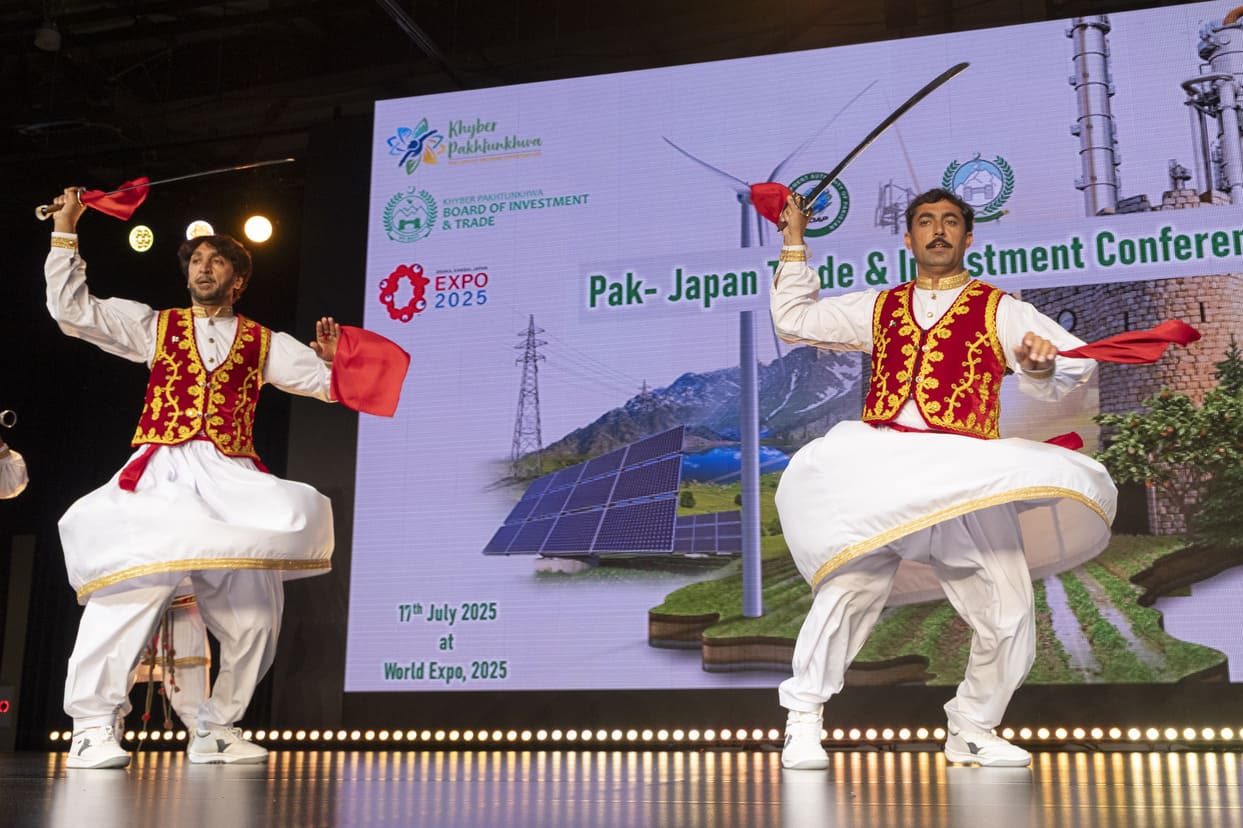
Osaka, July 14, 2025 — A beautiful showcase of Pakistan’s cultural vibrancy came alive at world Expo 2025 Osaka as performers from Khyber Rifles presented the traditional Khattak dance on the pop-up stage of Expo. Known for its energetic footwork and bold sword choreography, the performance drew a large crowd of Japanese and international visitors who gathered in admiration of the martial folk dance.

The Khattak dance, rooted in the warrior traditions of the Pashtun tribes, was performed with synchronized movements and swirling swords—offering a stunning display of rhythm, strength, and heritage. Spectators enthusiastically took photos and videos, and many stayed after the performance to take pictures with the performers, creating a moment of cultural exchange and celebration.

Pakistan is participating at Expo 2025 under the theme “Universe in a Grain of Salt”, highlighting its ancient traditions, natural wonders like Pink Rock Salt, and its vision for a sustainable and inclusive future.

The performance was part of a series of sideline cultural activities hosted around the Expo grounds, reaffirming Pakistan’s rich and diverse identity on the world stage.

Pakistan Showcases Investment Potential of Khyber Pakhtunkhwa at Expo 2025 Osaka

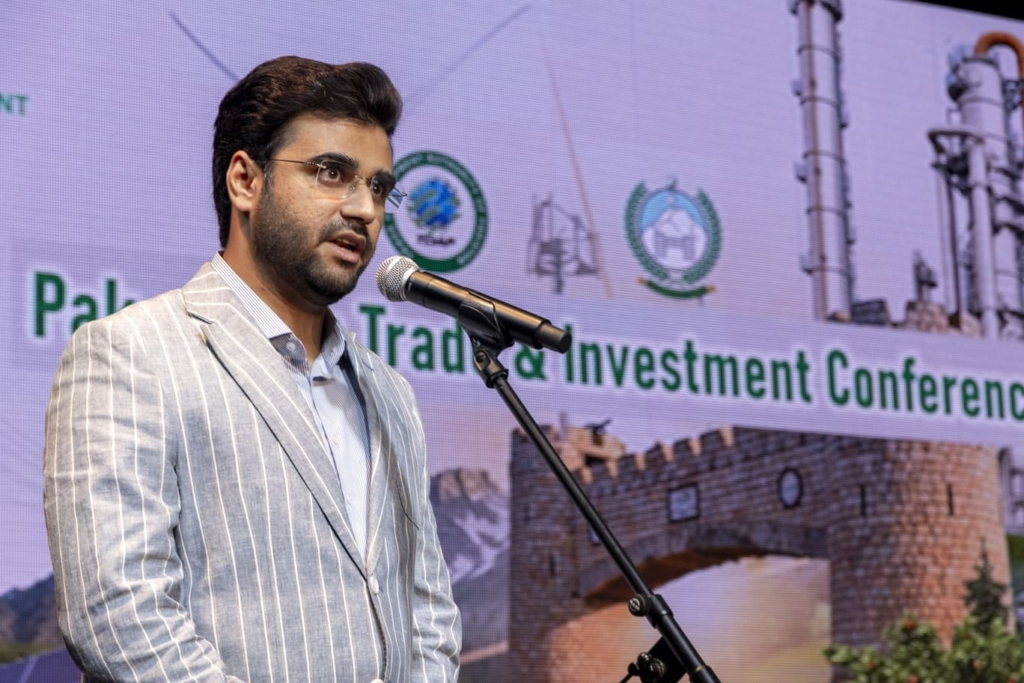
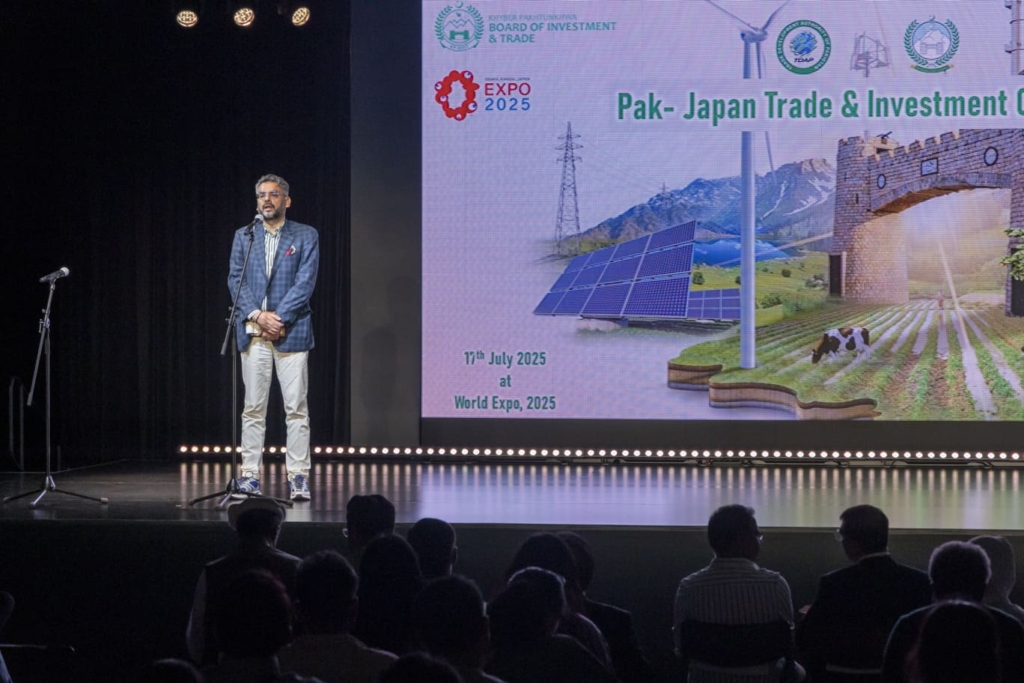
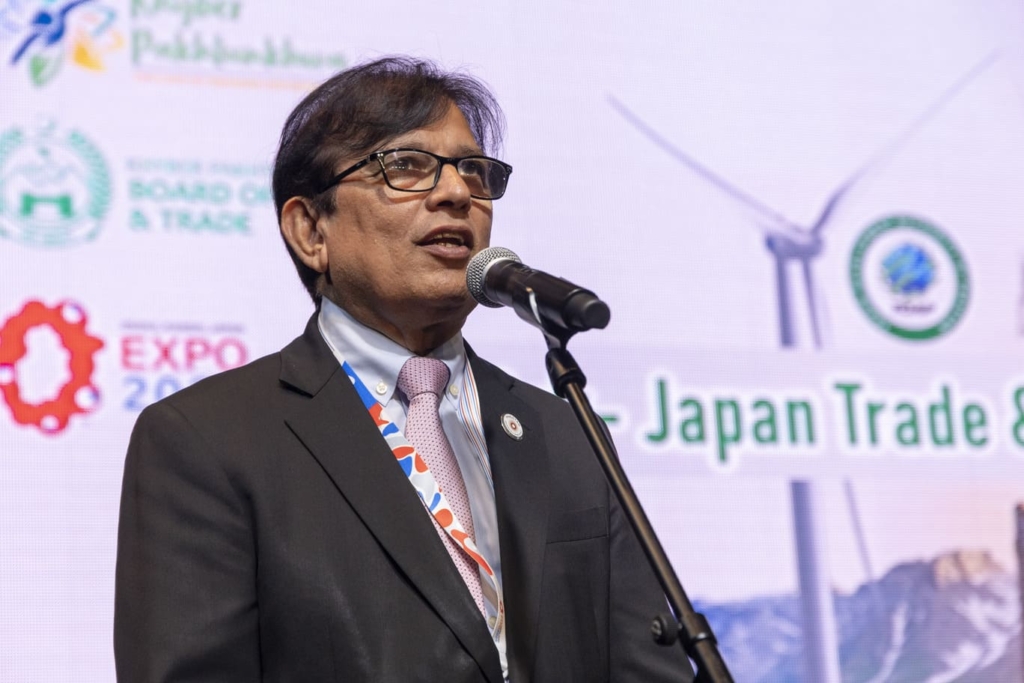
Osaka, Japan: July 17, 2025 – Trade Development Authority of Pakistan (TDAP), in collaboration with Khyber Pakhtunkhwa Board of Investment & Trade (KP-BOIT), successfully hosted the Pak-Japan Trade & Investment Conference on July 17, 2025, at the World Expo 2025, Osaka. The event drew strong interest from the international Business community especially Japanese businessmen, as well as diplomats, investors, and Expo general visitors.

The conference served as a strategic business outreach, spotlighting the immense economic and tourism potential of Khyber Pakhtunkhwa (KP), a province rapidly emerging as a key destination for foreign investment.

“With a renewed focus on economic development, industrialization, and regional connectivity, KP now stands as a promising destination for foreign direct investment across multiple sectors—including energy, mining, tourism, agriculture, and industrial manufacturing.”
Said Mr. Hassan Masood Kunwar, VC, KPBOIT, while opening the formal proceedings of the conference.

The session featured presentations and discussions by senior KP government officials and advisors on topics including:

  • KP’s competitive advantages as a destination for foreign direct investment
  • Tourism and cultural heritage as economic growth drivers
  • Infrastructure development and regional connectivity opportunities

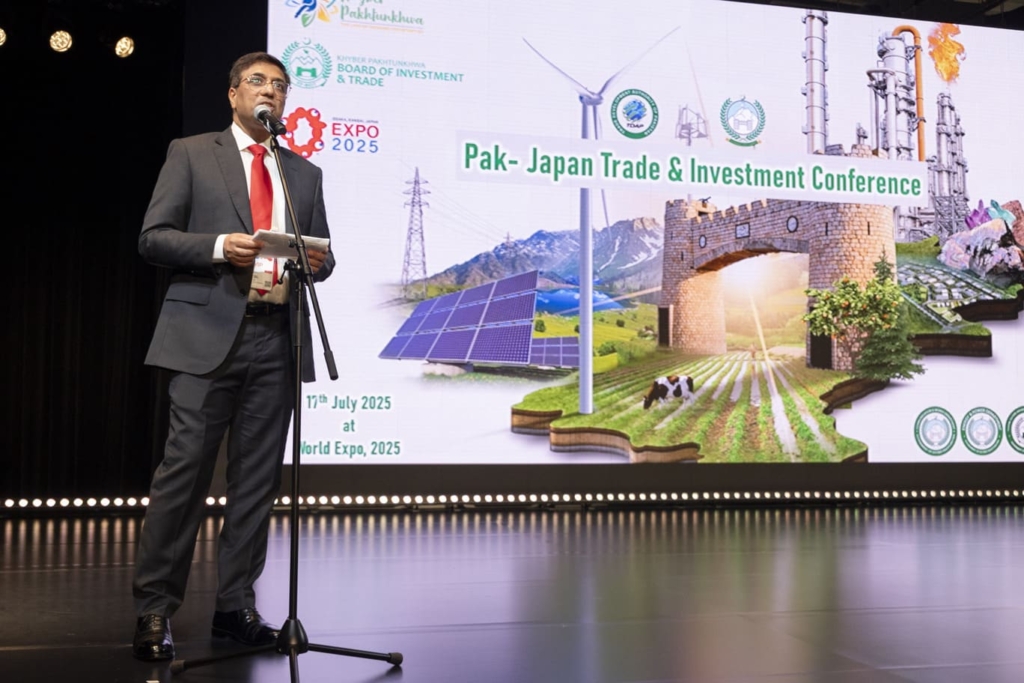
Delivering the welcome remarks, Mr. Abdul Hameed, Ambassador of Pakistan to Japan/ Section Commissioner General for Expo 2025, emphasized the importance of economic diplomacy and remarked, “Pakistan’s future lies in sustainable partnerships. Today, we extend a sincere invitation to our Japanese friends to explore the business potential of Khyber Pakhtunkhwa, a province with unlimited potential especially of mineral resources.”

Mr. Muzzammil Aslam, Advisor to the Chief Minister KP on Finance, highlighted fiscal reforms and incentives offered by the Government of Pakistan, stating, “KP is investor-ready. Our government is committed to create a conducive environment for the investors offering various incentives, unlocking private sector-led growth.”

Dr. Abdul Samad, Director of Archaeology & Museums, showcased KP’s archaeological treasures and cultural tourism routes through engaging visual content. Emphasizing on potential of religious tourism in Pakistan, he invited the visitors to explore the remains Gandhara civilization specifically in KP region.

 Attendees were also shown short documentaries on KP’s mineral wealth, Gandhara Civilization and strategic sectors, offering a comprehensive overview of investment-ready opportunities as well as cultural heritage of the province.

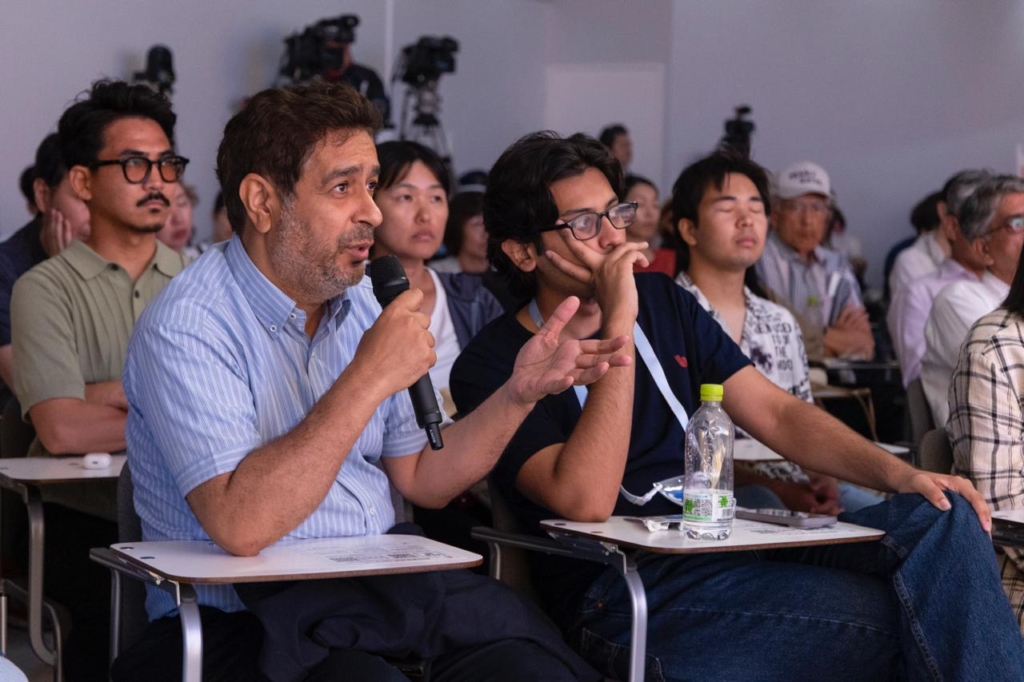
The conference concluded with a productive networking session between KP officials and Japanese counterparts. Discussions were held on potential collaborations in mining, hospitality, logistics, and heritage tourism. Participants expressed appreciation for the direct access to government leadership and the clarity of KP’s strategic investment roadmap.

Following the official program, dance performances by the troupe from Khyber Pakhtunkhwa brought a piece of KP’s soul to Osaka. These performances were served a mean to invite international audience to experience Pakistan in a beautiful way. The traditional music of “Dhol” & “Shehnai” and Khattak Sword dance of the troupe reflected the resilience and warmth of Pakistani people.

Mr. Muhammad Naseer, Project Director of the Pakistan Pavilion, noted, This was not just a conference, it was a genuine dialogue between potential investors and Investment departments . Platforms like this, held on the side-lines of the Pavilion, amplify Pakistan’s voice at a global forum. The Pavilion’s natural theme, anchored by the iconic Pink Rock Salt, continues to be a major attraction at Expo 2025.”

In parallel with the business conference, the Pakistan Pavilion hosted three vibrant cultural evenings (July 14–16) at the Expo’s Pop-Up Stages. The Khattak Dance, traditional music, and regional performances from KP drew enthusiastic crowds and widespread acclaim.

These cultural showcases complemented the investment narrative by presenting Pakistan as a country rich in tradition, diversity, and hospitality. Set within the broader message of the Pakistan Pavilion at Expo 2025, the performances offered visitors a deeper emotional and cultural connection with the country and reaffirmed the Pavilion’s role as a vibrant platform for showcasing Pakistan’s identity, creativity, and global potential.

Pakistan Food Festival Brings Culinary Heritage to Expo 2025 Osaka

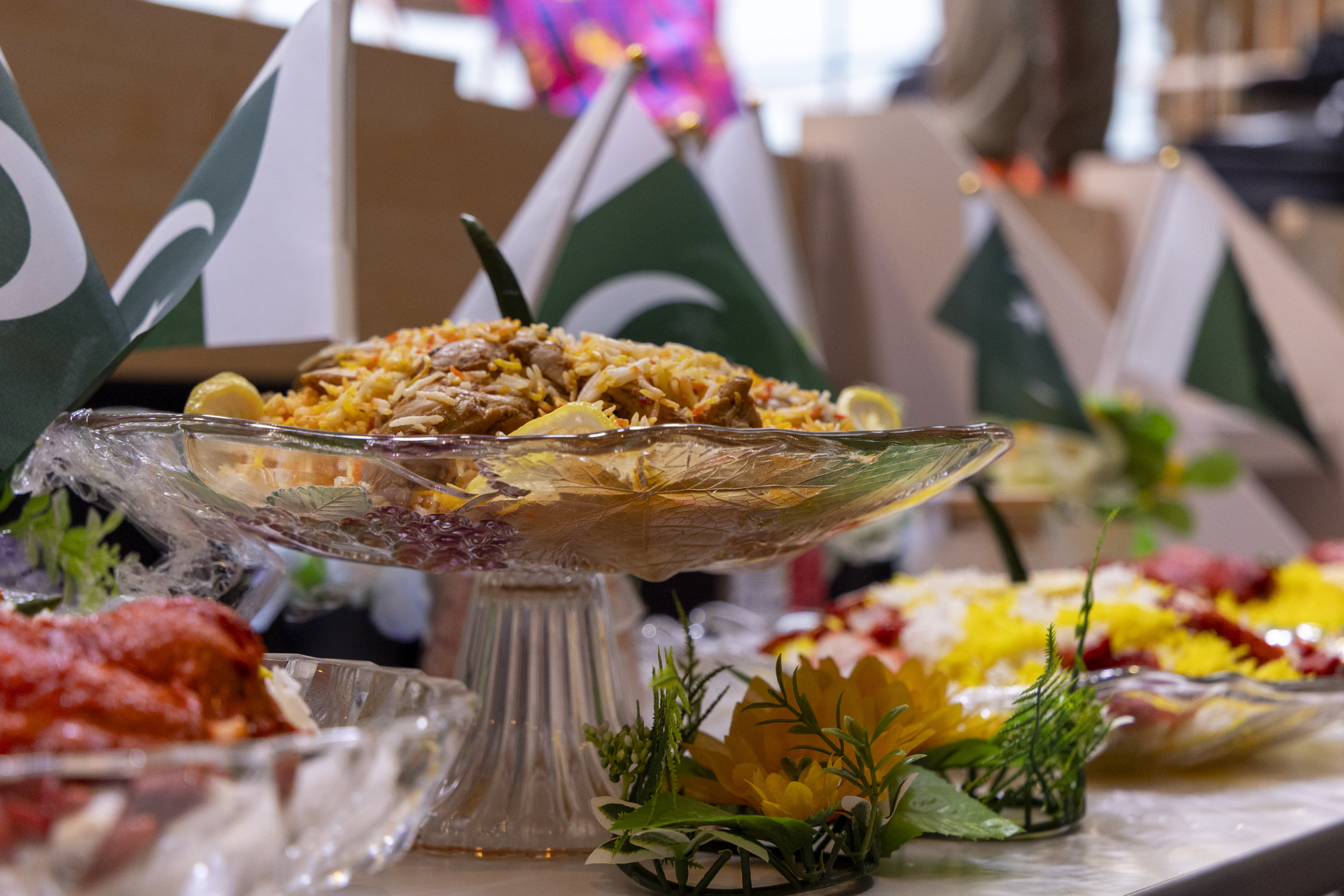
From June 23 to 26, the Pakistan Pavilion came alive with the sights, sounds, and aromas of the Pakistan Food Festival, organized by the Trade Development Authority of Pakistan (TDAP). This four-day celebration invited visitors to discover the country’s culinary heritage through its most iconic flavors, paired with live music that highlighted tradition, connection, and warm hospitality.

Day 1 – Biryani Day

The festival opened with the bold, spiced aroma of biryani drifting through the Pop Up Stage South. Guests savored plates of fragrant basmati rice layered with tender meat and slow-cooked spices – a dish that has long symbolized celebration across Pakistan. Live music and performances set an energetic tone, welcoming visitors into a world of flavor and heritage.

Day 2 – Mango Day

On the second day, Pakistan’s legendary mangoes took center stage. Sun-ripened and hand-picked, these golden fruits offered a taste of summer at its sweetest. Visitors enjoyed fresh slices while learning about the mango’s deep cultural roots, all to the rhythm of live performances that brought joy to the Pop Up Stage South.

Day 3 – Dates Day

At the Pop Up Stage Outer East, Day 3 honored dates — nature’s humble gift and a timeless emblem of Pakistani hospitality. Guests explored their rich, earthy sweetness and learned about their role in cuisine and wellness. With music filling the evening air, the celebration nourished both palate and spirit.

Day 4 – A Taste of Everything

The festival concluded with a grand finale uniting all three treasures – biryani, mangoes, and dates – in one unforgettable evening. Visitors gathered to share food, stories, and music, leaving with lasting memories of Pakistan’s culinary soul and a sense of connection that transcends borders.

From the Salt Ranges of Pakistan to the World Stage: Pink Rock Salt Takes Spotlight at Expo 2025

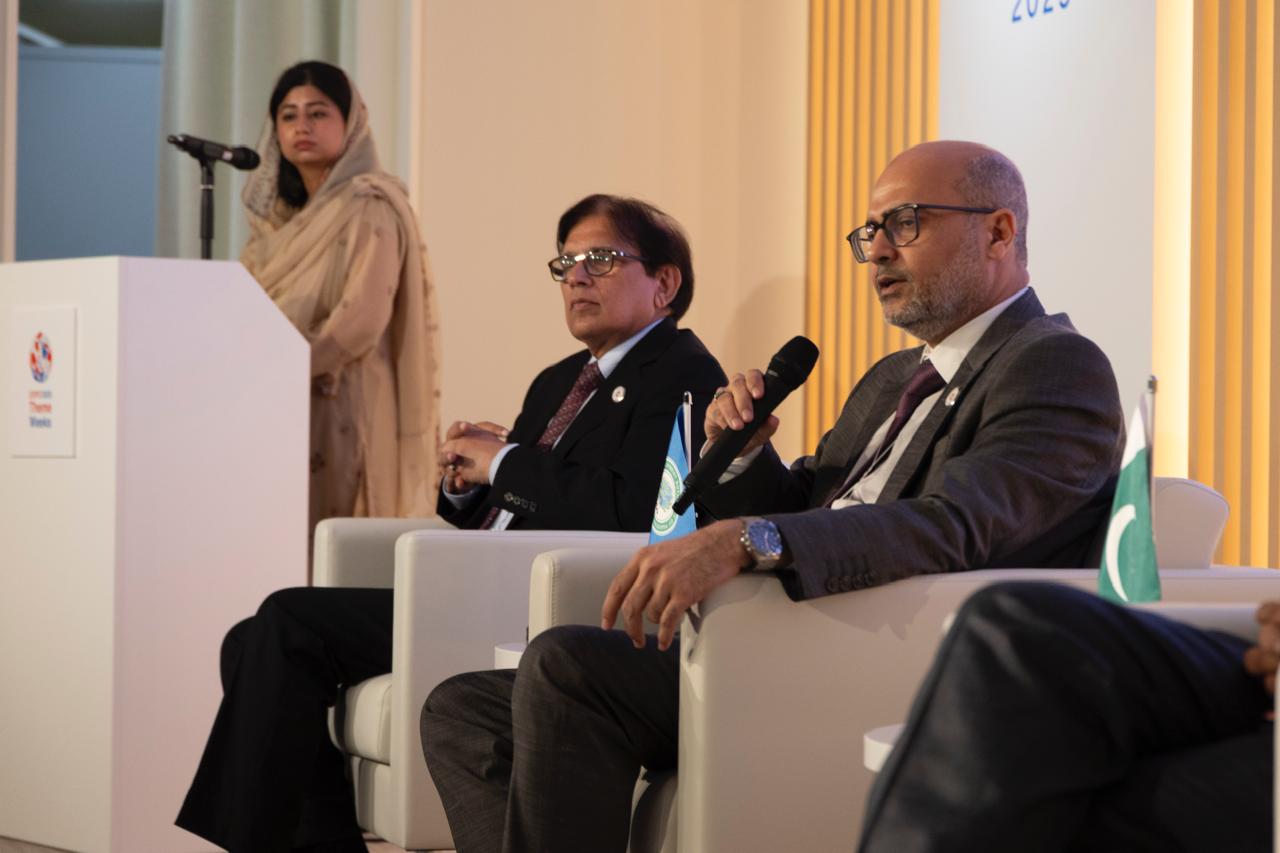
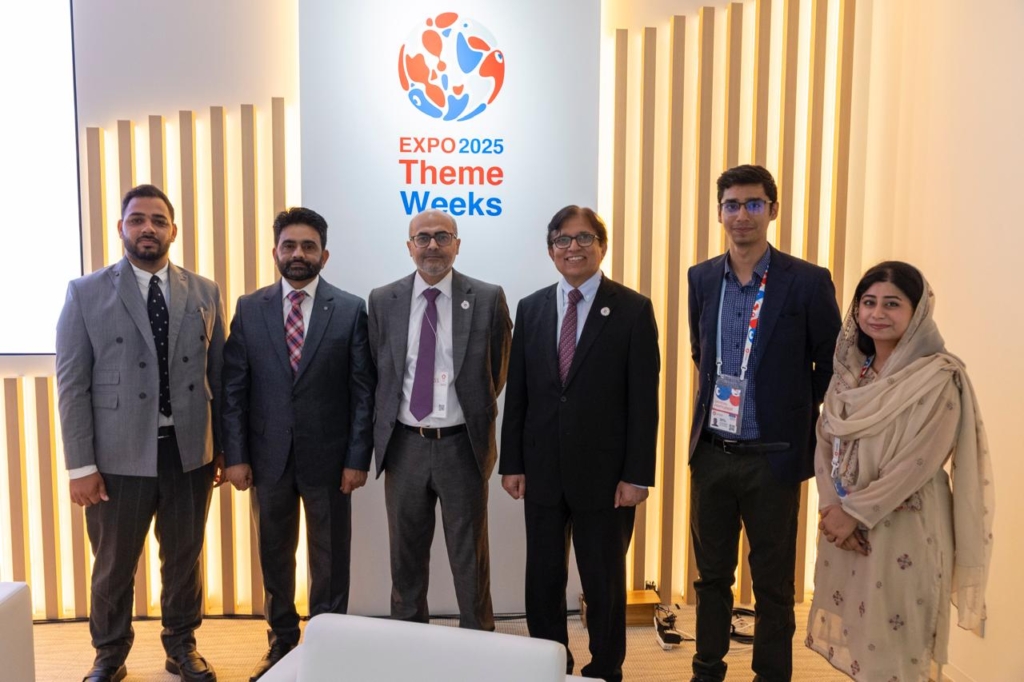
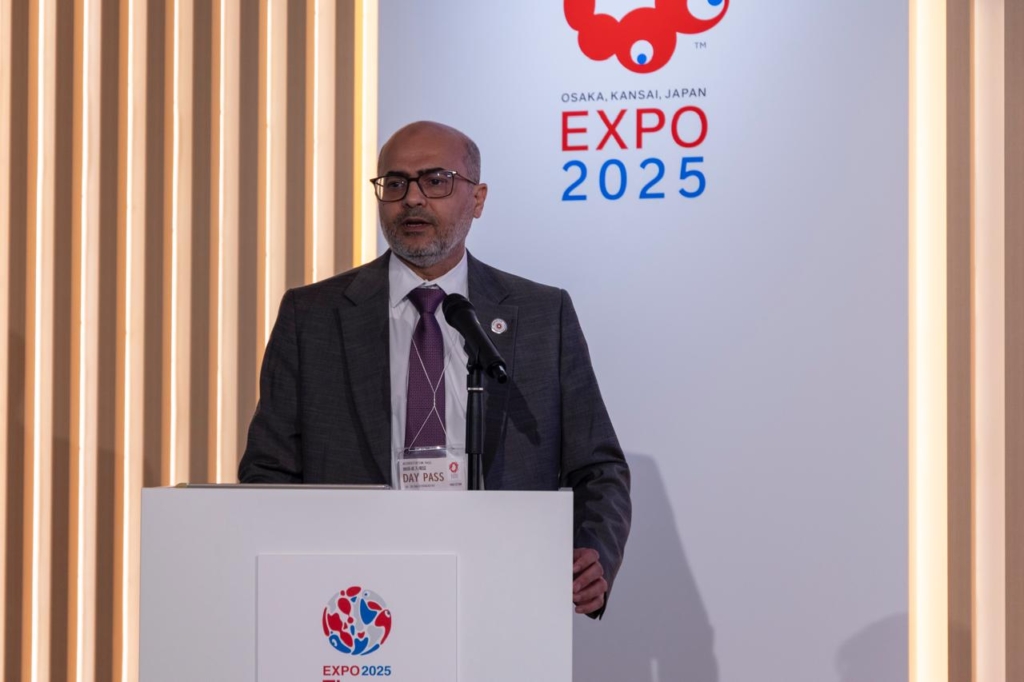
Osaka, Japan – June 20, 2025 – Aligning with the Expo 2025 Osaka’s “Health & Well-being Week,” the Pakistan Pavilion hosted a panel discussion titled “Pink Rock Salt: Trade, Health & Investment Potential” on Friday, June 20, 2025 at the Theme Weeks Studio on the Expo site. Organized by Pakistan Mineral Development Corporation (PMDC) in collaboration with the Trade Development Authority of Pakistan (TDAP), the event spotlighted the mineral legacy, health benefits and Pakistan’s trade potential of the Pink Rock Salt.

“Our pink salt is not just a mineral, it is a wellness product with global relevance,” said Mr. Asad Ahmed. “From nutrition to therapeutic uses, it has the potential to become Pakistan’s next major health brand. Japanese and international businesses can leverage this opportunity by partnering with Pakistan for its development and distribution.”


The event also featured the official documentary film of Pakistan Pavilion, titled: The Universe in a Grain of Salt depicting the visuals of the Salt Range and the interior of the magical Khewra Mine.

Focusing on export markets and branding initiatives, Mr. Muhammad Naeem noted,

“Pakistan’s pink salt is internationally recognized, yet under-leveraged. With the right branding and protection under GI laws, we can transform it into a premium product on the world stage.”


Discussions focused on building robust value chains, expanding product diversification, and forging international partnerships to unlock new markets. In addition, the panel stressed the importance of Geographical Indication (GI) protection to position pink rock salt as a premium, certified product on the world stage.

Mr. Muhammad Naseer, Project Director of the Pakistan Pavilion at Expo 2025, added “At Expo 2025, we are not just showcasing natural resources, we are telling a story of global relevance. This event helped position pink rock salt as a wellness product, a trade asset, and a symbol of Pakistan’s commitment to sustainable living and global well-being.”


The event was held within the broader narrative of the Pakistan Pavilion, where the Pink Salt features the infrastructure and the core elements of the pavilion design. It further reinforced the pavilion’s theme of balance between nature, wellness, and innovation, offering a compelling platform to translate heritage into opportunity and awareness into trade.

The event recording is available at:
https://www.youtube.com/live/_JsGPM-kgGw?si=zkF6_qKmBffTpTFo

Engaging Across Borders — Ministerial Visits at Expo 2025 Osaka

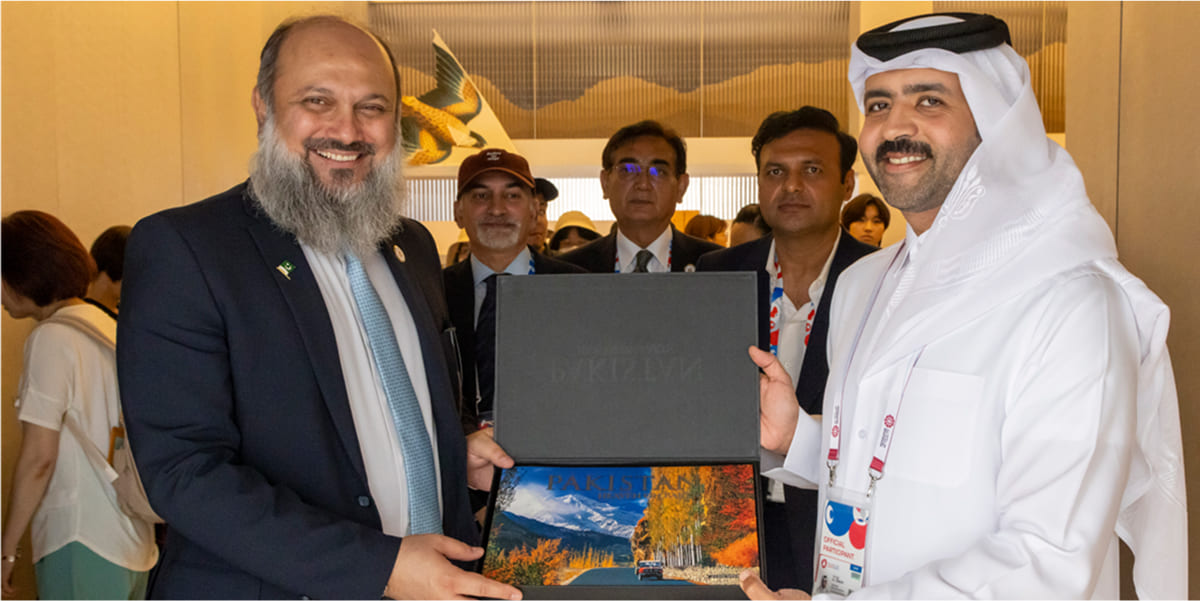
During his time at Expo 2025 Osaka, Mr. Jam Kamal Khan, Federal Minister for Commerce, Pakistan, visited over a dozen national pavilions — including those of the UAE, UK, Türkiye, Saudi Arabia, Qatar, China, USA, France, Japan, Azerbaijan, Tajikistan, Palestine, and Pakistan.

These visits highlighted Pakistan’s commitment to global dialogue, regional cooperation, and strengthening diplomatic and economic ties through meaningful engagement. From shared heritage to innovation and sustainability, each interaction reflected a spirit of mutual respect and a shared vision for a connected future.

Khewra Pink Rock Salt: Trade, Health & Global Potential

Summary of Event:

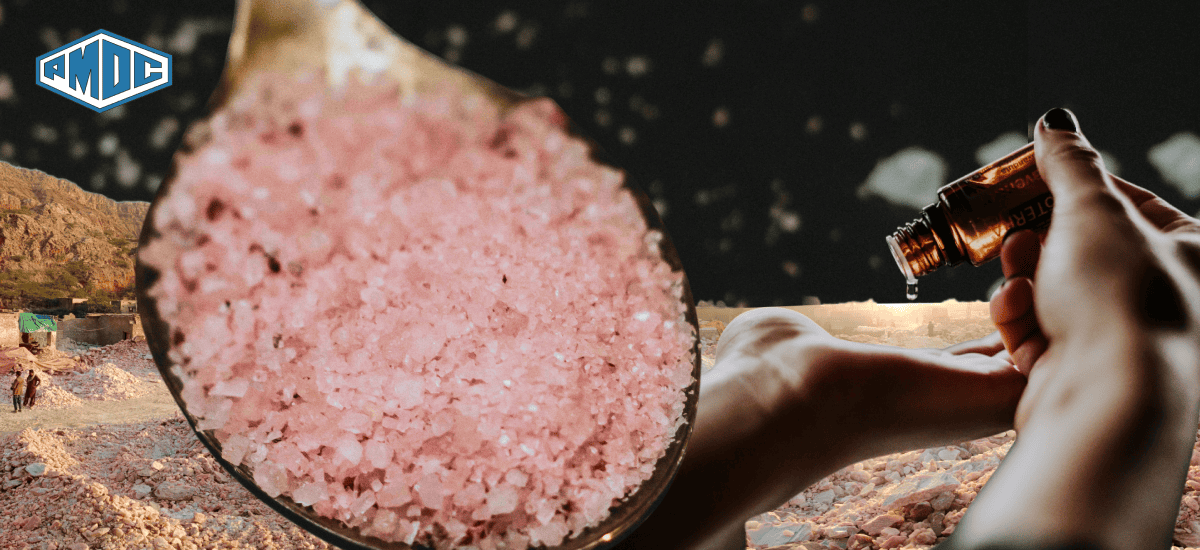
This event will showcase Khewra Pink Rock Salt, highlighting its health benefits, culinary uses, and therapeutic properties. Interactive sessions will focus on rich resources of Khewra Pink Rock salt in Pakistan, its composition and its health benefits including respiratory health, detoxification, and mineral benefits.

The event aims to promote exports, attract global buyers, and strengthen Pakistan’s position in the natural wellness industry. Expected outcomes include increased awareness, international collaborations, and expanded market reach for Pakistan’s salt industry. Besides, there will be a display of slat products including salt lamps, bath salts etc.

Promoting Buddhist Tourism to Pakistan: Federal Minister for Commerce meets with Senior Japanese Priest

May 28, 2025 – Osaka, Japan: During his official visit to Expo 2025 Osaka, the Federal Minister for Commerce, Mr. Jam Kamal Khan, led a series of high-level engagements to promote Pakistan’s trade, investment, tourism, and cultural diplomacy.    

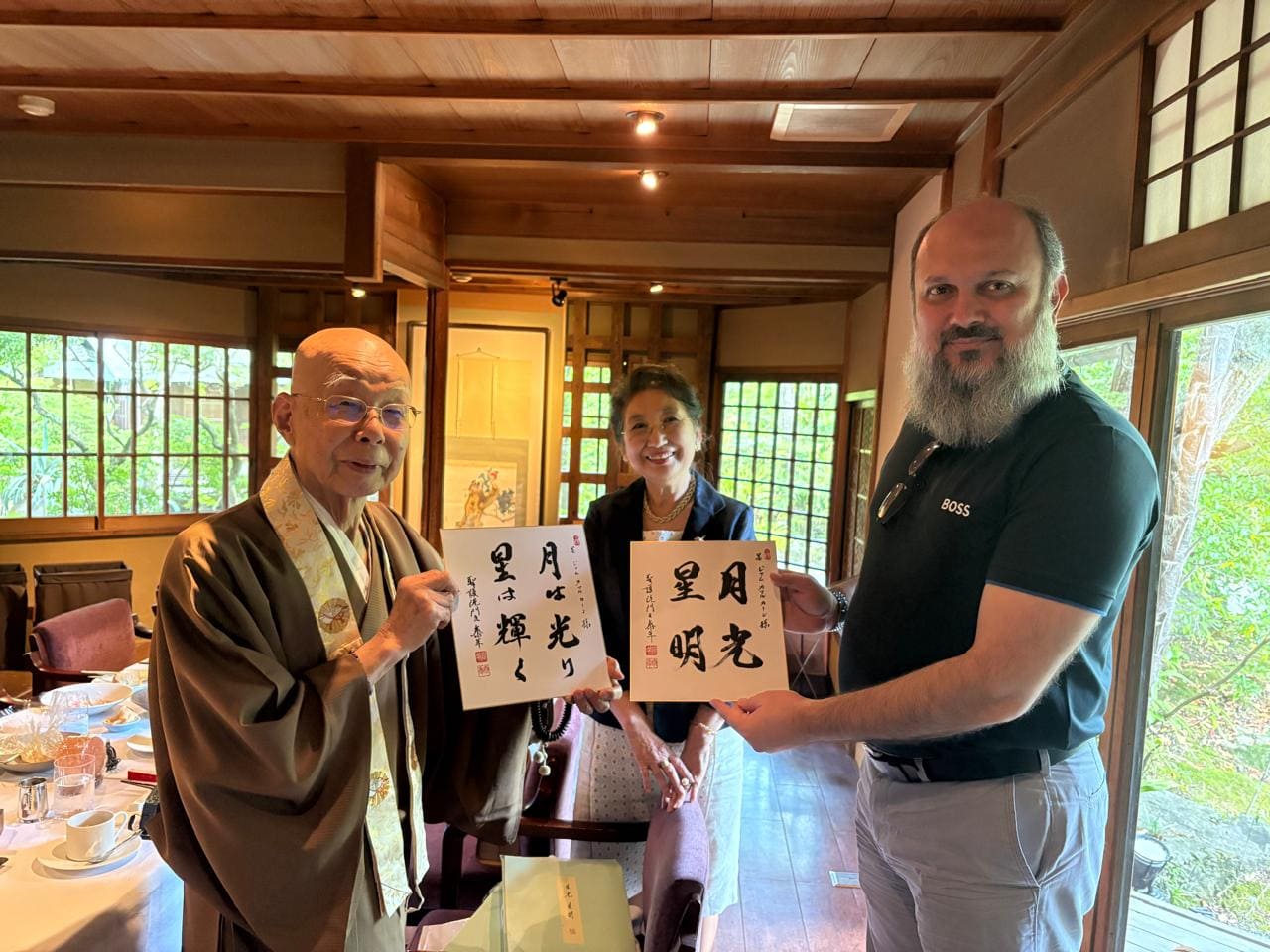
During the visit, Federal Minister Jam Kamal Khan also held a significant meeting with the 79th Head Priest of Shōgoin Monzeki, who also serves as Secretary-General of the Kyoto Buddhist Association.

The meeting focused on fostering religious tourism, interfaith understanding, and deeper cultural ties between Pakistan and Japan. As part of the conversation, Pakistan’s rich spiritual landscape and its ancient Buddhist heritage, including sites linked to the Gandhara civilization, were highlighted as meaningful opportunities for future pilgrimages and cultural exchange.

The priest expressed deep interest and support. He pledged to visit Pakistan with a delegation and committed to encouraging other Buddhist centers across Japan to consider pilgrimage and cultural visits to Pakistan’s Gandhara sites.

Such dialogues reflect Pakistan’s broader vision at Expo 2025 Osaka: to build bridges through shared history, mutual respect, and timeless traditions.

Follow updates on social networks

“Pakistan Pavilion shines at Expo 2025 Osaka, Japan”, said Federal Minister for Commerce, Pakistan

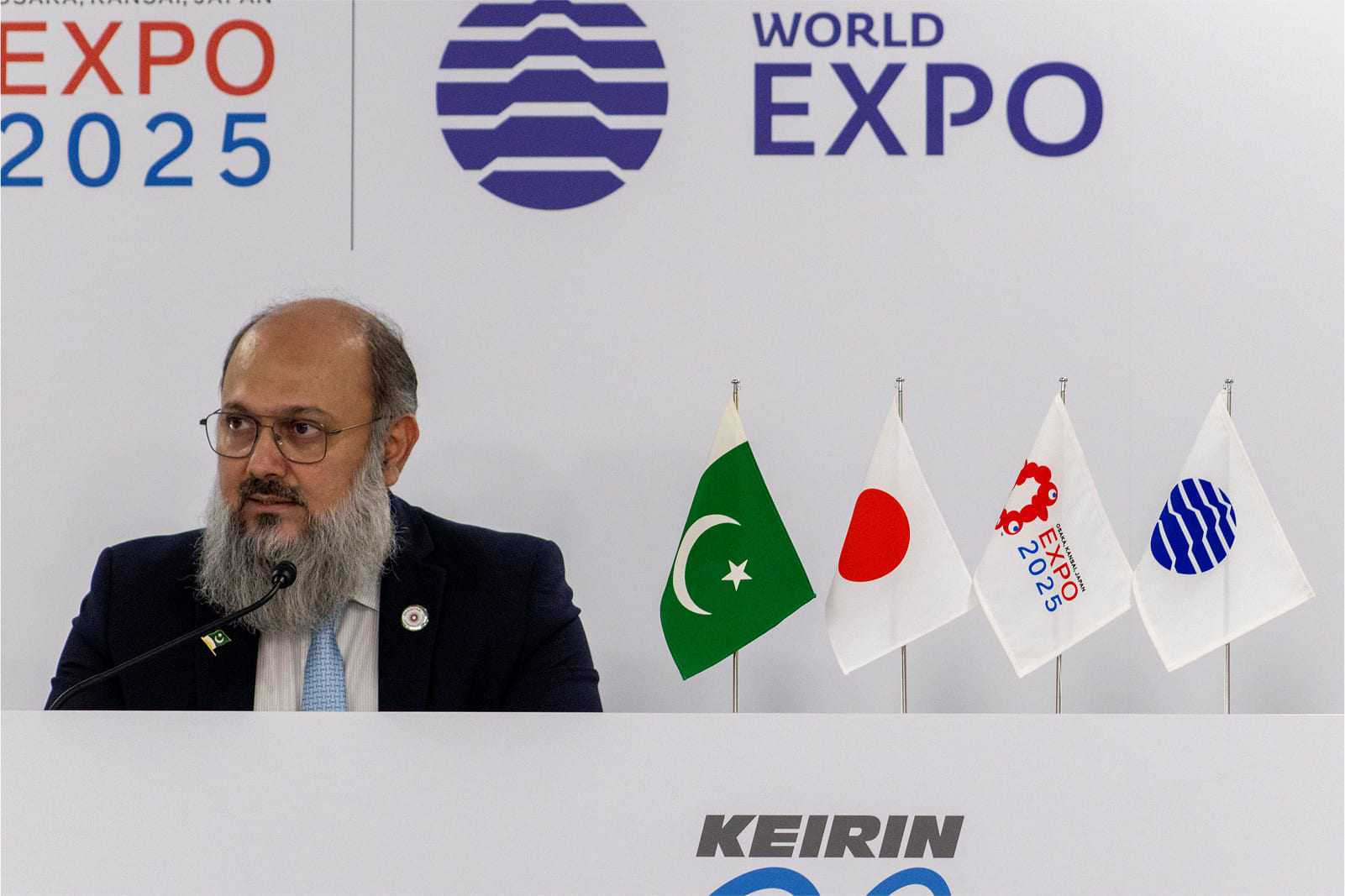
May 27, 2025 – Osaka, Japan: “The theme of Pakistan pavilion at Expo 2025, Osaka is inspired by unique natural treasure Pink Rock Salt, found only in the Salt Range of Pakistan”, said Mr. Jam Kamal Khan, Federal Minister for Commerce, Islamic Republic of Pakistan, while talking to media today at Expo 2025, Osaka. During the media briefing, he outlined the vision of Pakistan’s participation in World Expo 2025, Osaka; which encapsulates Pakistan’s goals for sustainable growth, cultural harmony, and economic prospects. The event was attended by both Japanese and international media.

Sharing insights on the broader vision of participation, the Honorable Minister emphasized that Pakistan cannot remain absent from global platforms like Expo 2025 Osaka, where the world comes together to exchange ideas and to address challenges collectively. He stated that Pakistan has made its presence felt with a bold and unified theme that reflects the country’s commitment to sustainability, creativity and exemplary craftsmanship.

He narrated that with the theme “Universe in a Grain of Salt,” Pakistan’s pavilion presents a compelling narrative rooted in nature. Highlighting the Pavilion’s symbolic use of pink rock salt—one of Pakistan’s most iconic natural resources—the Minister explained, “Salt, in its purity and strength, represents our timeless connection to the earth. Through it, we are sharing a vision of sustainability and nature-centric progress with the world.”

“The Pavilion was built on 100% energy conservation and minimal carbon emissions, aligning perfectly with the broader theme of Expo 2025: ‘Designing Future Societies for Our Lives,’” he added. “Our message is both simple—future societies must be born from nature and must remain linked to it.”


The media talk also offered a closer look at the growing impact of the Pakistan Pavilion, which has become one of the most visited pavilions at Expo 2025. Drawing attention with its architectural references to pink rock salt and natural materials, the Pavilion tells a story of wellness, nature, and cultural reflection.

“The Pavilion has touched a nerve, it’s about reconnecting with nature, and with each other,” the Minister noted. “It’s more than design; it’s a message of balance and renewal.”


Minister Jam Kamal Khan also shared details of Pakistan’s vibrant lineup of upcoming events at the Expo, including the Pakistan Food Festival, Cultural Performances, Trade-Related Conferences, and the National Day celebrations on August 14. These events aim to foster cross-cultural dialogue, celebrate Pakistan’s creative energy, and highlight the country’s dynamic trade potential.

The Honorable Minister also highlighted Pakistan’s potential in sectors like textiles, food and agriculture, minerals, digital services, and clean energy. He encouraged international business community to explore investment and joint ventures, underlining Pakistan’s young workforce, strategic location, and ongoing policy reforms.

“We are at a turning point,” said Minister Jam Kamal Khan. “Pakistan is ready to engage more deeply with the region and the world, and Japan is a key part of that vision.”


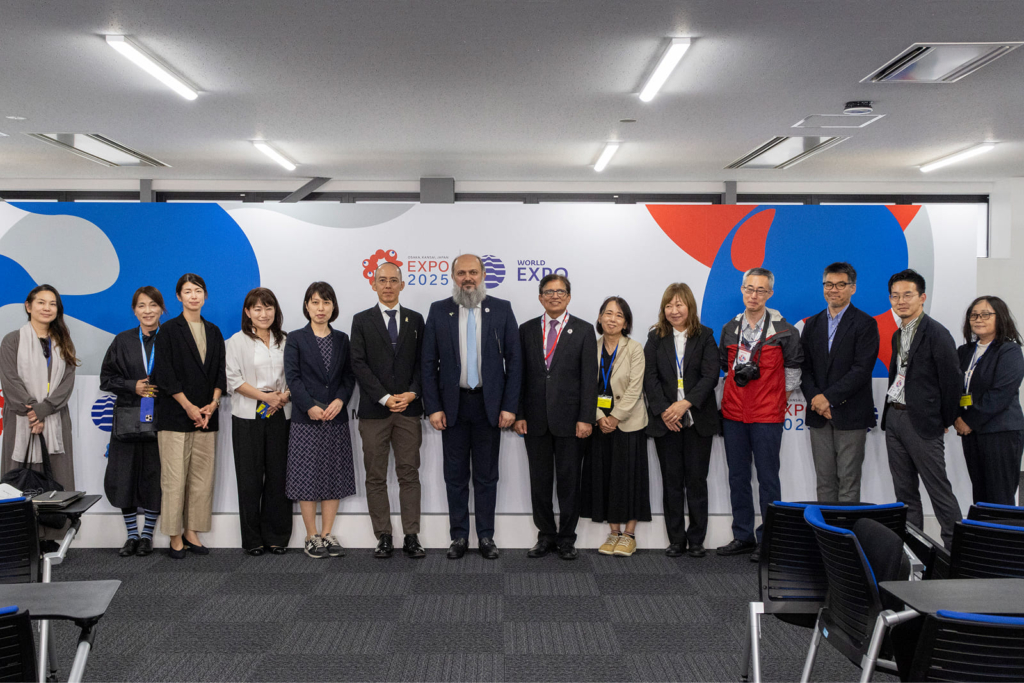
The event wrapped up with a media Q&A and group photo session, providing attendees with a clearer sense of Pakistan’s vision, not just for trade, but for meaningful global engagement.

Follow updates on social networks

About World Expo 2025 Osaka:

Expo 2025 Osaka is a world exposition that will bring together nations, organizations, and individuals to address global challenges and showcase innovative solutions under the theme “Designing Future Society for Our Lives”, with sub-themes “Saving Lives”, “Empowering Lives” and “Connecting Lives”. The Pakistan Pavilion will celebrate the nation’s rich cultural heritage, innovative spirits, and philosophical depth under the theme “Universe in a Grain of Salt”. Through immersive exhibits and interactive experiences, the Pavilion aims to inspire global audiences and foster international collaboration.

About Trade Development Authority of Pakistan: The Trade Development Authority of Pakistan (TDAP) is the premier government agency dedicated to fostering, promoting, and enhancing Pakistan’s international trade. With a mission to boost the country’s exports and connect Pakistani businesses to global markets, TDAP plays a pivotal role in trade development. TDAP’s comprehensive services encompass market research, trade promotion, capacity building and facilitating business collaborations. TDAP invites businesses, investors, and stakeholders to collaborate in shaping a vibrant and competitive future for Pakistan’s trade sector.

The Music Icon Bilal Maqsood at the Pakistan Pavilion

Renowned musician and founding member of the legendary pop-rock band Strings, Bilal Maqsood visited the Pakistan Pavilion at Expo 2025 Osaka — immersing himself in the Pink Salt landscape and the story of Pakistan told through design, tradition, and artistry.

From the Healing Garden to the cultural Display Area, his visit celebrated the intersection of art and heritage.
We were honored to welcome him!